Expert Care

Our Services

Full-scope optometry for children and adults — from routine eye tests to specialised treatments.

We offer a comprehensive range of eye care services including:

  • Comprehensive vision and eye health examinations for children and adults
  • Assessment of short-sightedness, long-sightedness, astigmatism and age-related vision changes
  • Convergence and focus-related issue assessment for visual fatigue or double vision
  • Referral to eye specialists and other health professionals
  • Contact lens fittings — soft, rigid and orthokeratology lenses
  • Eye health checks after laser refractive surgery
  • Diabetic retinal examinations including pupil dilations
  • Computerised visual field testing and glaucoma screening
  • Advanced digital mapping (topography) of the cornea
  • OCT and retinal photography for disease diagnosis and management
  • Ocular disease management and therapeutics
01

Comprehensive Eye Examinations

Examinations are comprehensive and include assessment of vision and eye health. Common vision issues include short-sightedness, long-sightedness and age-related decreases in vision. It is also important to assess convergence- and focus-related issues which can cause visual fatigue or double vision at various distances.

Common eye health issues include dry eye and cataracts. You may have eye health problems even if your sight feels clear — eye health checks are recommended for those with clear sight and for those who have had laser refractive surgery, to screen for glaucoma and macular degeneration.

What's Included

  • Assessment of short-sightedness, long-sightedness and astigmatism
  • Age-related vision change (presbyopia) assessment
  • Convergence and focus-related testing
  • Computerised visual field testing and glaucoma screening
  • Retinal photography and OCT scans
  • Diabetic retinal examinations including pupil dilation
  • Advanced corneal topography
  • Referral to eye specialists where needed

Dilated Eye Examination

Pupil dilation allows the optometrist to fully examine the retina using a special magnifying lens, providing a clear view of the macula, optic nerve, blood vessels and peripheral retina. This enables detection of:

  • Diabetic retinopathy — swelling or leaking blood vessels in the retina
  • Age-related macular degeneration — yellow deposits beneath the retina
  • Glaucoma — changes in the shape and colour of the optic nerve
02

State-of-the-Art Equipment

Strathfield Eyecare is committed to continually updating to the latest techniques and technologies. We invest in advanced diagnostic equipment so we can detect eye conditions earlier and manage them more effectively.

Retinal Photography

An advanced camera system produces high-resolution photographs of your retina, blood vessels and optic nerve. Images are analysed to screen for abnormalities and assist with early detection of macular degeneration, glaucoma and diabetic retinal changes. Images are stored and tracked over time for ongoing monitoring.

Optical Coherence Tomography (OCT)

Our Nidek OCT creates a comprehensive 3D image of the microscopic layers of your retina — painless and non-invasive. It can detect structural damage before patients notice any problems, enabling early treatment that can preserve sight.

Corneal Topography

Advanced 3D imaging technology used to map the surface curvature of the cornea. This is essential for fitting ortho-K and other contact lenses, and for monitoring conditions such as keratoconus.

Oculus Keratograph K5M

Used for our specialised dry eye assessments. The K5M measures tear break-up time, meibomian gland health via infrared meibography, and blink patterns, then compiles a detailed Jenvis PRO Dry Eye Report for accurate tracking over time.

03

Contact Lens Fitting

As contact lenses sit directly on the eye, they must be assessed carefully at the initial fitting and at all subsequent aftercare appointments to ensure ongoing eye health, safety and comfort. We fit a wide range of contact lens types to suit every lifestyle and prescription.

Types of Contact Lenses We Fit

Soft Disposable

Daily, weekly, fortnightly or monthly soft lenses — the most popular choice for comfort and convenience.

Rigid Gas Permeable

Ideal for high prescriptions or irregular corneas such as keratoconus. Provide sharper vision in certain cases.

Orthokeratology (Ortho-K)

Overnight rigid lenses worn during sleep to gently reshape the cornea. Worn to slow myopia progression and achieve glasses-free daytime vision.

Coloured Lenses

Available in prescription and cosmetic variants, carefully fitted and monitored for eye health and safety.

The Fitting Process

  • Comprehensive baseline eye examination
  • Corneal curvature measurement and fitting assessment
  • Trial lens selection and in-office assessment
  • Insertion, removal and care training
  • Scheduled aftercare appointments to monitor eye health
04

Orthokeratology (Ortho-K)

Ortho-K is an innovative and non-surgical way of using specially designed rigid contact lenses to gently reshape the cornea overnight to correct refractive error. You wear the lenses during sleep and remove them each morning — resulting in clear vision all day long, without glasses or contact lenses.

Research has proven Ortho-K to be safe and reliable when fitted and worn correctly. At Strathfield Eyecare we use state-of-the-art technology to design the most stable and comfortable Ortho-K lenses, which can now correct prescriptions that were not possible in the past.

Benefits of Ortho-K

  • Freedom during the day — no glasses or contact lenses for school, work, sport or leisure
  • Slows myopia progression — effectively stops or dramatically reduces worsening of short-sightedness
  • Non-surgical and reversible — a safe, cost-effective form of vision correction
  • Ideal alternative to laser surgery — suitable for patients considering LASIK, SMILE or LASEK
  • Perfect for active lifestyles — sports, swimming, dusty or screen-heavy work environments

Who is Ortho-K Suitable For?

Ortho-K is suitable for children and adults with mild to moderate short-sightedness and/or astigmatism. It is particularly recommended for children whose myopia is progressing rapidly. Contact us to find out if you or your child are suitable.

한국어 안내 (Korean)

Ortho-K (드림렌즈)

Ortho-K(Orthokeratology, 각막굴절교정술)는 특별히 설계된 하드 콘택트렌즈를 수면 중 착용하여 각막의 형태를 일시적으로 변화시키고 근시와 난시를 교정하는 비수술적 시력교정 방법입니다.

밤에 렌즈를 착용하고 아침에 렌즈를 제거하면, 낮 동안에는 안경이나 일반 콘택트렌즈 없이 선명한 시력으로 일상생활을 할 수 있습니다. 학교나 직장에서의 일상생활은 물론, 스포츠, 수영, 야외활동 등 안경이나 콘택트렌즈가 불편할 수 있는 다양한 상황에서도 보다 자유롭고 편리하게 생활할 수 있습니다.

Ortho-K는 올바르게 처방되고 적절하게 관리하여 착용할 경우 안전하고 효과적인 시력교정 방법으로 사용되어 왔습니다.

Strathfield Eyecare의 Ortho-K

Strathfield Eyecare에서는 최신 각막 측정 및 렌즈 설계 기술을 활용하여 각 개인의 눈에 맞는 맞춤형 Ortho-K 렌즈를 설계합니다. 각막의 형태와 근시·난시 정도를 세밀하게 분석하여 보다 편안하고 안정적인 렌즈 착용과 선명한 시력을 목표로 합니다. 최근에는 렌즈 설계 기술의 발전으로 과거에는 Ortho-K로 교정하기 어려웠던 다양한 도수와 각막 형태에도 보다 폭넓게 적용할 수 있게 되었습니다.

Ortho-K의 장점

  • 낮 동안 안경이 필요 없는 자유로움 — 학교, 직장, 스포츠 및 레저 활동을 안경이나 일반 콘택트렌즈 없이 편리하게 즐길 수 있습니다.
  • 근시 진행 관리 — Ortho-K는 특히 성장기 어린이와 청소년의 근시 진행을 멈추거나 늦추는 데 도움이 될 수 있는 방법으로 널리 활용되고 있습니다.
  • 비수술적이고 가역적인 시력교정 — 레이저 수술 없이 시력을 교정할 수 있으며, 렌즈 착용을 중단하면 각막은 일반적으로 원래 형태로 돌아옵니다.
  • 레이저 시력교정술의 비수술적 대안 — LASIK, SMILE, LASEK 등의 레이저 시력교정술을 고려하고 있지만 수술을 원하지 않는 분들에게 하나의 대안이 될 수 있습니다.
  • 활동적인 생활에 적합 — 스포츠, 수영, 야외활동은 물론 먼지가 많은 환경이나 장시간 디지털 기기를 사용하는 환경에서도 편리하게 활용할 수 있습니다.

Ortho-K는 누구에게 적합할까요?

Ortho-K는 가벼운 정도부터 중간 정도의 근시 및/또는 난시가 있는 어린이와 성인에게 적합할 수 있습니다. 특히 성장기에 있는 어린이와 청소년 중 근시가 빠르게 진행되고 있는 경우, 근시 진행 관리의 한 방법으로 고려할 수 있습니다.

다만 Ortho-K의 적합 여부는 사람마다 다르기 때문에 각막의 형태, 근시와 난시의 정도, 눈의 건강 상태 등을 정밀하게 검사한 후 결정하는 것이 중요합니다.

본인 또는 자녀에게 Ortho-K(드림렌즈)가 적합한지 궁금하시다면, 언제든지 편하게 문의해 주세요. Strathfield Eyecare에서 눈 상태를 자세히 확인하고, Ortho-K가 적합한지 상담해 드립니다.

For more information visit Ortho-K Strathfield →

05

Myopia Management

Myopia (near-sightedness) is a condition where the eyeball elongates, causing blurry distance vision. It is frequently corrected with spectacles or soft disposable contact lenses — but corrective lenses alone do not slow the worsening of myopia.

Myopia is expected to affect 50% of the global population by 2050. Any degree of myopia increases the risk of sight-threatening conditions including glaucoma, retinal detachment and myopic maculopathy.

Why Control Matters

Myopia can worsen very quickly without intervention, particularly in children. The higher the degree of myopia at adulthood, the greater the risk of serious eye disease. Early intervention in childhood is essential.

Treatment Options

Orthokeratology (Ortho-K)

Overnight lenses that reshape the cornea. Highly effective at slowing myopia progression while also providing daytime glasses-free vision.

Soft Multifocal Contact Lenses

Specialised daily or monthly lenses worn during the day that use peripheral defocus to slow eye elongation.

Atropine Eye Drops

Low-dose atropine applied nightly has strong clinical evidence for slowing myopia progression with minimal side effects.

Speciality Spectacle Lenses

Innovative lens technologies (DIMS, HALT, CARE) provide passive myopia control throughout the school day.

For more information visit Myopia Control Strathfield →

06

Dry Eye Assessment

Dry eye disease is a very common eye condition affecting all age groups. The most common cause is Meibomian Gland Dysfunction (MGD) — where the meibomian glands that line the eyelids fail to produce enough quality oil to stabilise the tear film, leading to evaporative dry eyes.

Dry eye affects over 30 million people in the United States and at least 344 million worldwide. It is one of the most frequent reasons patients visit optometrists.

Why Early Assessment Is Critical

MGD is chronic, progressive and largely irreversible. Many people with serious MGD have no symptoms or minimal symptoms — by the time you notice symptoms, significant gland loss may have already occurred. Early intervention and careful management can vastly improve long-term outcomes.

Common Symptoms

  • Burning, stinging or scratchy sensation
  • Eye redness and sensitivity to light
  • Difficulty wearing contact lenses
  • Watery eyes (a reflex response to irritation)
  • Blurred or fluctuating vision, especially on screens
  • Eye fatigue and discomfort at the end of the day

Our Assessment — Oculus Keratograph K5M

We use the advanced Oculus Keratograph K5M to measure multiple aspects of the ocular surface and compile a detailed Jenvis PRO Dry Eye Report. This allows us to identify the cause quickly, establish a baseline, and accurately track changes over time.

The initial assessment covers:

  • Tear film stability (TBUT — Tear Break-Up Time)
  • Meibomian gland imaging via infrared meibography
  • Tear meniscus height and volume
  • Blink quality and frequency analysis
  • Meibomian oil quality and expressibility
  • Eyelid structure and hygiene assessment
  • Lifestyle, diet, screen habits and environment review

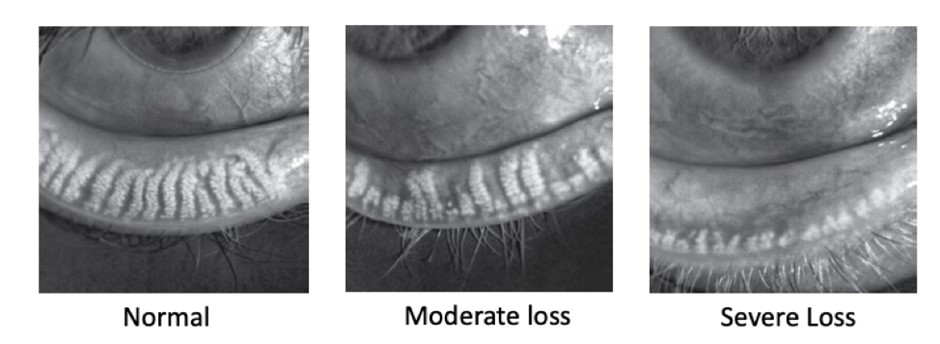
Here are some images of meibomian glands below which are included in our dry eye assessment. They are called meibography and are taken with infra-red light.

Infrared meibography images comparing normal meibomian glands, moderate gland loss and severe gland loss

For more information visit Dry Eye Relief →

07

Dry Eye Treatment

Home remedies such as lubrication drops and warm compresses provide short-term relief but do little to treat the underlying cause of dry eyes. In-clinic treatments aim to get to the root cause — treating the meibomian glands directly to improve function, provide long-lasting relief and significantly slow further gland damage.

We are proud to be the first practice in New South Wales to offer InMode's Envision Dry Eye Treatment.

In-Clinic Treatment Options

Envision by InMode First in NSW

The newest and most advanced dry eye treatment, using monopolar radiofrequency (RF) energy to stimulate meibomian gland function and dramatically improve tear film quality. Minimal downtime, significant results.

IPL — Intense Pulsed Light

A well-established treatment for MGD and evaporative dry eye. Controlled pulses of light reduce inflammation around the eyelids and improve meibomian gland function, providing sustained relief over a series of sessions.

Rexon Eye

Uses Quantum Molecular Resonance (QMR) technology to stimulate cellular regeneration at a molecular level — promoting meibomian gland recovery and improved oil production without heat or light.

Blephasteam & Expression

Warm steam goggles soften thickened meibomian oils, followed by manual expression to clear gland blockages and restore healthy oil flow to the tear film.

LLLT — Low-Level Light Therapy

Low-level red light therapy reduces inflammation and stimulates meibomian gland function, helping restore natural oil production and tear film stability.

Zest

A targeted eyelid margin treatment that gently exfoliates and cleanses the lash line, reducing the bacteria, biofilm and debris that contribute to blepharitis and MGD.

Meibomian Gland Expression

Manual expression of the meibomian glands to clear blockages and restore healthy oil flow, often performed alongside heat-based treatments for best results.

A Holistic Approach

Effective dry eye management goes beyond in-clinic treatments. We work with each patient to review their nutrition, screen habits, environmental factors and lifestyle to build a complete management plan. At Strathfield Eyecare we love your meibomian glands and want to keep them alive and healthy!

For more information visit Dry Eyes Relief →

08

DNEye® Scan

At Strathfield Eyecare we use the Rodenstock DNEye® Scanner — a revolutionary instrument that measures your entire visual system more precisely than any conventional eye test. This unprecedented precision enables our optometrists to create spectacle lenses that are truly personalised to your unique eyes.

"A Revolution in Individualised Lenses — The Sharpest Possible Vision."

Beyond a Standard Prescription

A conventional eye test measures just a few parameters (sphere, cylinder, axis). The DNEye® Scanner measures:

  • Wavefront aberrations of the entire optical system of your eye
  • Pupil size in different lighting conditions (day and night)
  • The natural resting position of your eyes for reading and distance
  • Precise corneal curvature and complete lens parameters

Biometric Intelligent Glasses™

The detailed data is incorporated directly into Rodenstock's Biometric Intelligent Glasses™, custom-manufactured and fine-tuned to your visual biometrics — not an average population prescription. The result:

  • Maximum sharpness across the entire lens surface
  • Better vision in low-light conditions
  • Reduced glare and halos at night
  • Larger comfortable visual zones with progressive lenses
  • Lenses uniquely personalised to you

For full details visit DNEye Strathfield →

Ready to take care of your eyes?

Call us on (02) 9745 9800 or book an appointment today.

Book an Appointment